

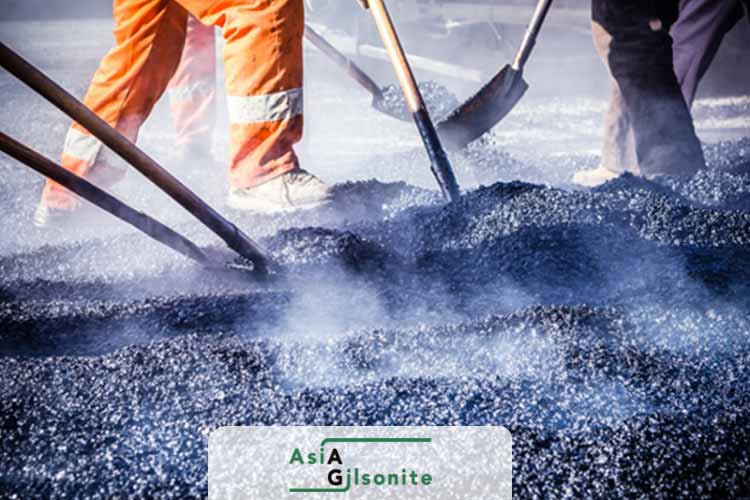
Gilsonite in asphalt mixtures is a solid natural asphalt material used to modify a paving binder or the finished hot mix. The result depends on the base bitumen, aggregate structure, target performance, dosage, particle size and plant process. For that reason, a project should begin with a laboratory design rather than a fixed recipe. See our Gilsonite overview and road-construction guide for the wider application context.
Define the Objective Before Production
First identify the problem the mixture must solve: high-temperature deformation, binder grade adjustment, moisture sensitivity, traffic loading or another project-specific requirement. Record the properties of the unmodified binder and control mixture, then select a trial range that can be evaluated against the applicable specification. A dosage that works with one binder or aggregate source should not be assumed to work with another.
Main Ways to Add Gilsonite to Asphalt Mixtures
Pre-blending with the asphalt binder
Gilsonite can be introduced into hot bitumen in a controlled blending unit before the binder enters the asphalt plant. Temperature, agitation or shear, residence time and feed rate must be sufficient for uniform dispersion without unnecessary thermal exposure. This route offers close control when the plant has suitable heating and mixing equipment.
Dry addition at the mixing plant
Powder may also be metered into the mixer with the mineral or aggregate stream. The exact feed point and sequence depend on the plant configuration. Accurate dosing, dust control, powder flow and enough mixing time are essential. A plant trial should confirm that the material is distributed through the batch and that no visible agglomerates remain.
Prepared blends or pellets
Some suppliers offer prepared blends or pelletized products for particular feeding systems. These are product-specific options rather than universal Gilsonite grades. Their carrier material, Gilsonite content and recommended procedure should be documented before they are compared with straight powder.
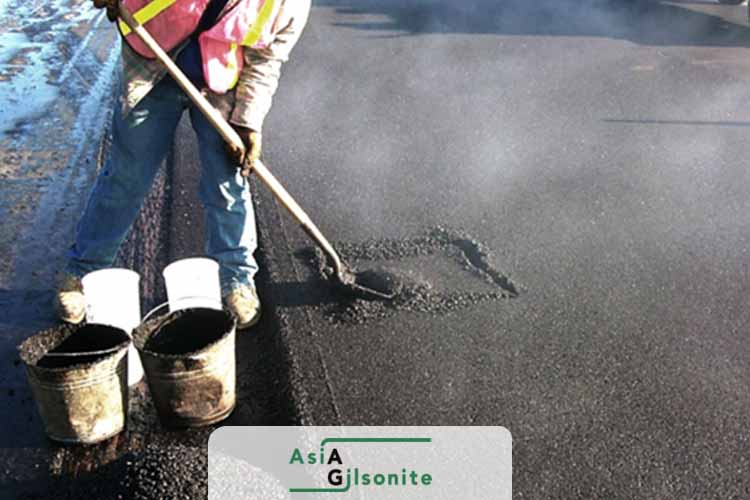
Variables That Control Dispersion
- Particle size: the selected size should suit the feeding and mixing system.
- Moisture: excess moisture can impair powder handling and plant consistency.
- Binder temperature: it affects softening and dispersion, but must remain within safe project and equipment limits.
- Mixing energy and time: both influence uniformity; more heat or time is not automatically better.
- Feed accuracy: calibration and batch records help prevent variation between loads.
How to Specify Gilsonite for Asphalt
Do not select material only by a marketing label such as “refined” or “micronized.” Request measurable properties relevant to the process: softening point, ash, moisture, particle-size distribution and a batch certificate. Our laboratory specifications, Gilsonite analysis guide and Gilsonite powder guide explain these checks in more detail.
Laboratory Trial and Quality Control
Compare the modified design with an unmodified control. Depending on the pavement specification and project risk, the program may include binder viscosity and workability, volumetric properties, high-temperature rutting resistance, moisture susceptibility, and low-temperature or fatigue testing. Production control should also record material lot, dosage, temperatures, mixing time and observations at discharge.
Gilsonite may change binder stiffness and mixture behavior, but a benefit is not guaranteed in every formulation. Review the measured performance in Gilsonite asphalt benefits and testing, and see what asphalt is for basic binder and mixture terminology.
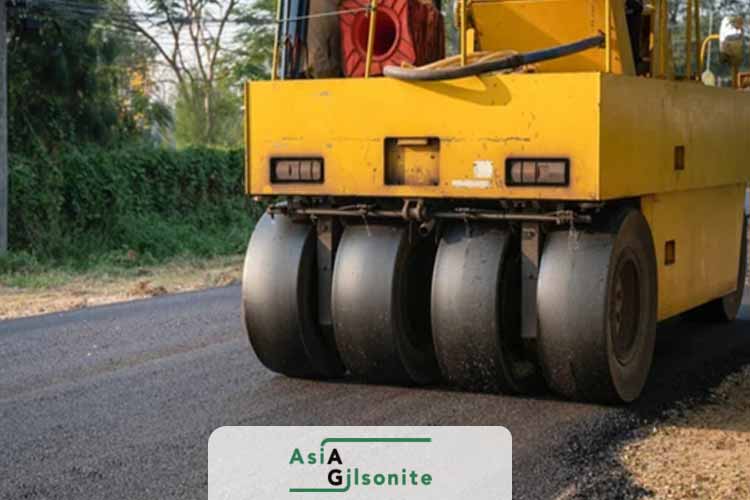
Common Production Risks
- Poor dispersion: visible lumps or inconsistent binder properties can indicate unsuitable feeding, temperature or mixing conditions.
- Excessive stiffness: an unsuitable dosage may reduce the balance between rutting and cracking performance.
- Inconsistent dosing: uncalibrated equipment can create batch-to-batch variation.
- Moisture and storage problems: dry, controlled storage supports reliable feeding.
Related Asphalt and Gilsonite Guides
- Gilsonite for asphalt pavement
- Gilsonite in road construction
- Potential benefits and required testing
- Bitumen vs. Gilsonite
Conclusion
A reliable Gilsonite asphalt mixture comes from matching the material and addition route to the plant, then validating the design with laboratory and production data. For grade documents, samples or help planning a plant trial, contact Asia Gilsonite.