

Gilsonite for Asphalt and Pavement
Gilsonite as a Natural Asphalt Modifier
Gilsonite for asphalt is used as a natural asphaltite modifier in petroleum-bitumen binders and asphalt mixtures. Its high softening behavior, carbon-rich composition and compatibility with bituminous systems make it useful when a formulation needs greater stiffness, higher-temperature stability or improved resistance to permanent deformation.
The final result depends on the base bitumen, Gilsonite grade, particle size, dosage, aggregate and mix design. For road-specific selection and performance considerations, see our Gilsonite in road construction guide.
Asphalt Binder and Mixture Components
An asphalt mixture combines mineral aggregate with a petroleum-bitumen binder. The proportions, aggregate gradation and binder grade are selected for the climate, traffic and project specification; they should not be treated as one universal formula.
Gilsonite can be evaluated as a solid natural-asphalt modifier within that designed binder or mixture. It does not replace aggregate design, drainage, compaction or laboratory performance testing. For terminology and material differences, see bitumen vs. Gilsonite. For the related naming question, see is Gilsonite asphalt?
Where Gilsonite Fits in Asphalt Production
Gilsonite belongs in the asphalt-production stage defined by the approved binder or mixture design. The plant must control material addition, dispersion, mixing temperature and mixing time, while the contractor remains responsible for surface condition, drainage, placement and compaction.
Asia Gilsonite’s role is to supply the specified grade, particle size and available technical documentation. The project laboratory should confirm the final dosage and performance before field production. See the Gilsonite mixing and quality-control guide.
Mix Design and Project Requirements
Asphalt performance starts with the project mix design. Surface preparation, drainage, aggregate structure and compaction are construction responsibilities, while the role of Asia Gilsonite is to supply the specified natural Gilsonite modifier for the binder or asphalt mixture.
Existing Pavement and Recycled Material
Existing asphalt may be removed or recycled according to the contractor’s pavement design and local specification. Reclaimed asphalt pavement (RAP), aggregate selection and plant operation are project-specific. Gilsonite can be evaluated as a modifier in new or recycled mixtures when laboratory testing confirms compatibility with the chosen binder and mix design.
Drainage and Site Conditions
Grading and drainage are critical parts of pavement construction and should be designed and executed by the project contractor or engineer. Adequate drainage helps protect the pavement structure from water-related damage. These construction steps are separate from Asia Gilsonite’s role as a supplier of Gilsonite modifier.
Base and Structural Preparation
The pavement structure, sub-base and drainage must be designed for the site, climate and traffic loading. These structural decisions affect field performance but do not determine the Gilsonite dosage; that dosage belongs to the approved binder or mixture design.
Gilsonite Grade and Particle Size
Gilsonite-modified asphalt can be evaluated for hot-mix and other compatible asphalt systems where the project calls for a natural asphalt modifier. Road-specific performance should be verified by laboratory mix design. See our Gilsonite in road construction page for pavement-focused guidance, or compare available Gilsonite powder grades.
Plant and Mix Control
The plant procedure should define whether Gilsonite is introduced through the binder or dry into the aggregate stream. Addition sequence, temperature, mixing time and dispersion must be controlled consistently, then checked against the approved job-mix formula.
Placement and Compaction
Placement temperature, lift thickness and compaction are controlled by the approved project procedure. A Gilsonite-modified mixture should be handled according to its measured workability and temperature window; appearance alone does not confirm performance.
Transitions and Joints
Transitions, longitudinal joints and transverse joints require project-specific preparation and compaction. Their performance depends on construction quality and drainage; using Gilsonite in the mixture does not remove the need for correct joint design and field control.
Final Compaction and Quality Checks
Final acceptance should rely on the project’s specified density, thickness, smoothness and material tests. Results from the Gilsonite-modified mixture should be compared with the approved control and target criteria rather than inferred from surface appearance.
Gilsonite in Asphalt and Road Paving
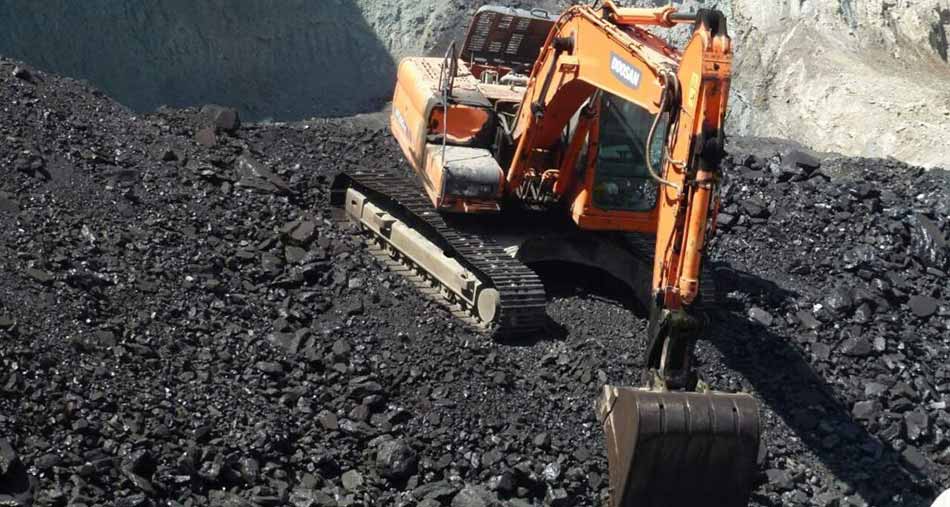
Gilsonite is a naturally occurring asphaltite used as a modifier in petroleum-bitumen binders and asphalt mixtures. Depending on the base binder, Gilsonite grade, particle size and mix design, it can increase binder stiffness and softening characteristics and may improve resistance to permanent deformation at high pavement temperatures.
Asia Gilsonite supplies natural Gilsonite from Middle Eastern deposits in selected ash grades and particle sizes. Final performance and the appropriate addition rate must be confirmed through laboratory binder and mixture testing for the specific project.
Asphalt Systems and Gilsonite Suitability
Common Asphalt Production Systems
Gilsonite suitability differs among hot-mix, warm-mix, cold-mix and porous asphalt systems. The base binder, production temperature, moisture conditions, aggregate structure and project specification determine whether it should be evaluated and which performance tests are required.
Hot Mix Asphalt (HMA) Paving
Hot-mix asphalt is produced at temperatures selected for the binder, aggregate moisture and plant process. Gilsonite may be evaluated as a modifier when the addition route, dispersion and performance are confirmed by the project mix design; no single production temperature applies to every formulation.
Warm Mix Asphalt (WMA) Paving
Warm-mix asphalt uses a selected process or additive to produce and place the mixture below the temperature of a comparable hot-mix design. Lower plant temperature may reduce fuel use and plant emissions under defined conditions, but an environmental claim requires a stated comparison and measured data. Gilsonite compatibility and workability must be confirmed for the specific warm-mix system.
Cold Mix Asphalt Paving
Cold-mix asphalt covers formulations that can be produced or placed without conventional hot-mix temperatures and is often used for maintenance or patching. Binder chemistry varies widely, so Gilsonite must not be assumed compatible; the formulator should verify solubility, storage stability, curing and final mixture performance.
Porous Asphalt Paving
Porous asphalt uses an intentionally open aggregate structure so water can move through the pavement system. Binder selection must be coordinated with void structure, drainage and durability requirements. Because Gilsonite can change stiffness and workability, its use in a porous mixture requires a dedicated laboratory design rather than a general dosage assumption.
Permeable Pavers: A Different Pavement System
Permeable interlocking concrete pavers are a concrete-unit pavement system, not an asphalt mixture. They are included here only to prevent terminology confusion and are not a direct application for a Gilsonite asphalt modifier.
Gilsonite Application in Asphalt Paving
Gilsonite is a naturally occurring asphaltite that can be used to modify petroleum bitumen and asphalt mixtures. In a properly designed formulation, it can increase binder stiffness and softening characteristics and may improve high-temperature deformation resistance. Performance depends on the base binder, Gilsonite grade, dosage, aggregate and mixing process.
Asia Gilsonite supplies natural Gilsonite from Middle Eastern deposits in selected ash grades and particle sizes for asphalt and other industrial applications.
Gilsonite-modified asphalt can be evaluated for hot-mix and other compatible asphalt systems where the project calls for a natural asphalt modifier. Road-specific performance should be verified by laboratory mix design. See our Gilsonite in road construction page for pavement-focused guidance, or compare available Gilsonite powder grades.
Where Gilsonite Can Be Evaluated
- Hot-mix asphalt: as a binder or mixture modifier when laboratory design confirms compatibility, dosage and performance.
- Other asphalt systems: only when the product formulation, plant process and project specification support its use.
- Pavement sealers: Gilsonite is a raw ingredient, not a finished sealer; the formulator must validate compatibility and final-product performance.
For process details see Gilsonite in asphalt mixtures. For sealer formulation context see Gilsonite for pavement sealer formulations.
Benefits of Gilsonite in Asphalt Paving
Gilsonite can change asphalt-binder and mixture properties, but the result depends on the base binder, grade, dosage, aggregate and production process. The potential effects below must be verified against an unmodified control through project-specific testing. See Gilsonite asphalt benefits and testing.
High-Temperature Performance
Gilsonite can increase binder stiffness and may improve resistance to permanent deformation at high pavement temperatures. The effect should be measured with the specified binder and mixture rutting tests because excessive stiffness can create other performance trade-offs.
Cracking and Low-Temperature Balance
A stiffer modified binder does not automatically provide greater flexibility. Low-temperature cracking and fatigue performance should be checked separately so the selected dosage balances rutting resistance with the project’s cracking requirements.
Moisture Susceptibility
Gilsonite does not make an asphalt pavement waterproof by itself. Evaluate the complete binder–aggregate system with the required moisture-susceptibility or stripping test, together with drainage, compaction and construction controls.
Aging Evaluation
Binder aging is influenced by temperature, air exposure, film thickness, production and service conditions. Any claimed change in oxidation or long-term aging should be supported by the applicable short- and long-term aging tests for the selected formulation.
Project Cost Evaluation
Gilsonite should not be assumed to reduce cost in every project. Compare material price, dosage, plant handling, testing, construction and expected maintenance using equivalent performance targets before making an economic claim.
Environmental Assessment
Being naturally occurring does not establish a lower carbon footprint or prove that a product is hazard-free. Environmental claims require a defined comparison and project-level life-cycle data covering extraction, processing, transport, production, service life and maintenance. See our performance and environmental assessment.
What Does the Gilsonite-Modified Asphalt Mixture Consist of?
There is no single universal Gilsonite dosage for every asphalt project. The appropriate addition rate depends on the base bitumen, Gilsonite grade, target stiffness, climate, traffic, aggregate structure and the required specification.
Gilsonite is normally introduced through a controlled plant mixing procedure selected for the binder and mixture. Laboratory testing should confirm compatibility, mixing temperature, dispersion, dosage and final performance before field production. For the two main addition routes, dispersion variables and plant quality-control checks, see Gilsonite in asphalt mixtures: mixing and quality control. Polymers or other additives may also be used when required by the approved mix design.
Field Preparation and Construction Controls
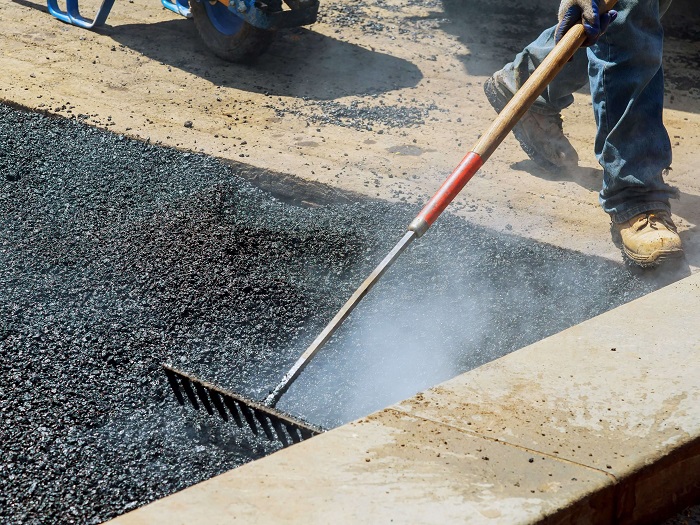
Field preparation and asphalt production must be controlled as separate parts of the project. Cleaning, repairs, grading, joints and compaction are construction responsibilities; Gilsonite grade, dosage, dispersion and mixing conditions belong to the approved binder and mixture design.
The checklist below summarizes field controls that can influence the measured performance of any Gilsonite-modified mixture. For plant introduction and quality-control variables, see Gilsonite in asphalt mixtures.
Cleaning the Surface
The surface of the pavement or roadway must be cleaned off any debris, dirt, and loose material so that the new asphalt can adhere firmly. It’s done either by sweeping, power washing or by using a vacuum truck.
Inspection
The surface should be inspected and identified to figure out the degree of damage to the existing pavement, the depth of the base material, existing cracks, potholes, or other defects.
Repairs
Any existing defects should be repaired before the new paving asphalt is added. This includes filling potholes, repairing cracks, and fixing any other damage to the surface.
Grading and leveling
After cleaning and repairs, grading should establish the required profile and drainage before placement. Gilsonite dosage is not determined by surface leveling; it is selected through the approved laboratory binder or mixture design.
Tack Coat
Before laying new asphalt down, a tack coat is administered on the surface so the new asphalt will stick and form a stronger bond.
Adding New Asphalt
The asphalt paving process then begins by adding a fresh, hot asphalt layer in a predetermined thickness.
Finishing
Once the asphalt is placed, it is spread and compacted using a compactor roller to provide a smooth finish that is level and compressed.
Curing period
Opening the pavement to traffic should follow the approved construction procedure and the temperature or curing requirements of the specific mixture. Conventional hot-mix asphalt primarily cools and gains stability; other binder systems may have separate curing requirements.
Gilsonite Dosage in Asphalt Mixtures
Dosage, Rehabilitation and Material Selection
There is no universal Gilsonite dosage for every asphalt project. The appropriate rate depends on the base bitumen, Gilsonite grade, target stiffness, climate, traffic, aggregate structure and specification. Laboratory binder and mixture testing should determine the dosage and mixing procedure before field production.
When an existing pavement is rehabilitated, the approved engineering design determines whether the project uses milling, an overlay, recycled material or full-depth replacement. Gilsonite may be evaluated as a modifier in the new or recycled mixture, but compatibility and final performance must be confirmed by the project mix design.
Gilsonite for asphalt should be selected against the binder, aggregate, mixing route and project test plan rather than by a universal dosage. Review our Gilsonite specifications and quality-control limits, the mixing and quality-control guide, and other Gilsonite applications. For grade and shipment information, contact Asia Gilsonite as a bulk Gilsonite supplier and exporter.